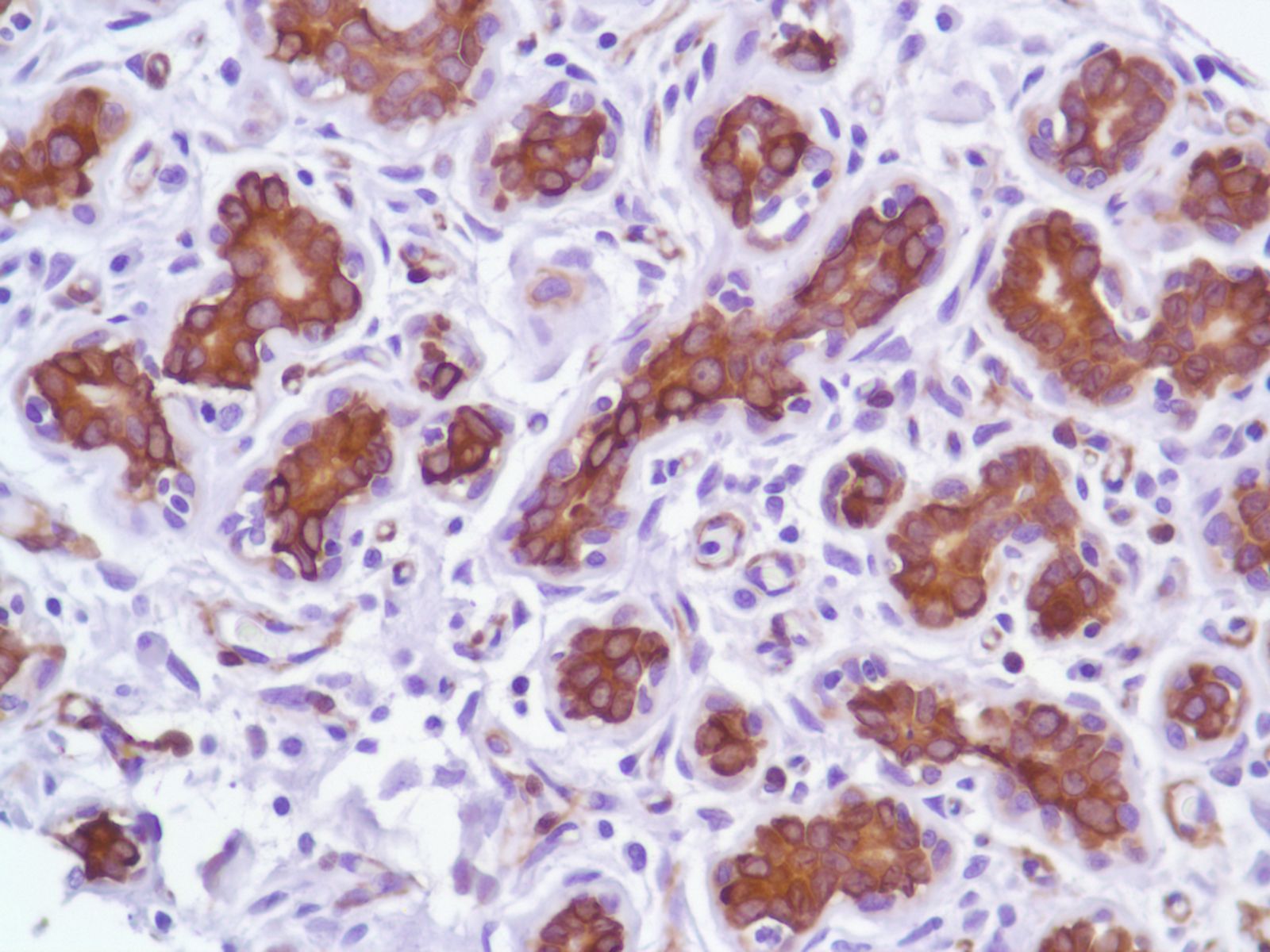
Tau is a neuronal microtubule associated protein found predominantly on axons. The function of rau is to promote tubulin polymerization and stabilize microtubules, but it also serves to link certain signaling pathways to the cytoskeleton. Tau, in its hyperphosphorylated form, is the major component of paired helical filaments (PHF) and neurofibrillary lesions in Alzheimer's disease (AD) brain. Hyperphosphorylation impairs the microtubule binding function of tau, resulting in the destabilization of microtubules in AD brains, ultimately leading to the degeneration of the affected neurons. Hyperphosphorylated tau is also found in a range of other central nervous system disorders. Numerous serine/threonine kinases, including GSK3 beta, PKA, Cdk5, and casein kinase II can phosphorylate tau. Alternate splicing of tau mRNA and differential phosphorylation contributes to the heterogeneity of Tau.